Other Publications

Education Columns

Faculty Development: The Resident in Difficulty

Courtney Humphrey, MD

The purpose of identifying a resident in difficulty is not for punishment, but rather for identification and remediation of deficiencies that can hinder professional development. A resident in difficulty may be identified as having academic problems, professional problems, or both.

Warning signs of a resident with academic difficulty may include defensiveness, unwillingness to precept patients, low in-service exam score, and minimal participation in rounds. Warning signs of a resident with professionalism problems may include hostility, conflicts with patients or staff, overconfidence, disorganization, tardiness, and unexcused absences. Choosing applicants wisely based on their United States Medical Licensing Examination (USMLE)/Comprehensive Osteopathic Medical Licensing Examination (COMLEX) scores, social interactions with current residents, interview skills, and interactions with the program coordinator are important steps in selecting residents who are likely to succeed. If the program has a behavioral health faculty member, he or she should also be involved in the interview process to pick up on subtle signs of professionalism problems.

Having a streamlined approach for identifying and remediating a resident in difficulty and having clear written standards can ease the process. Standards should be outlined for the program, for the year of training, and for each individual rotation. The evaluation system needs to be clearly defined, comprehensive, and tied to the outlined program standards. It should be designed and mapped to ACGME milestones and competencies.

For the past 5 months, our program has instituted the below sequence for managing residents in difficulty. This streamlined approach has allowed us to navigate the remediation process with the residents in an efficient manner.
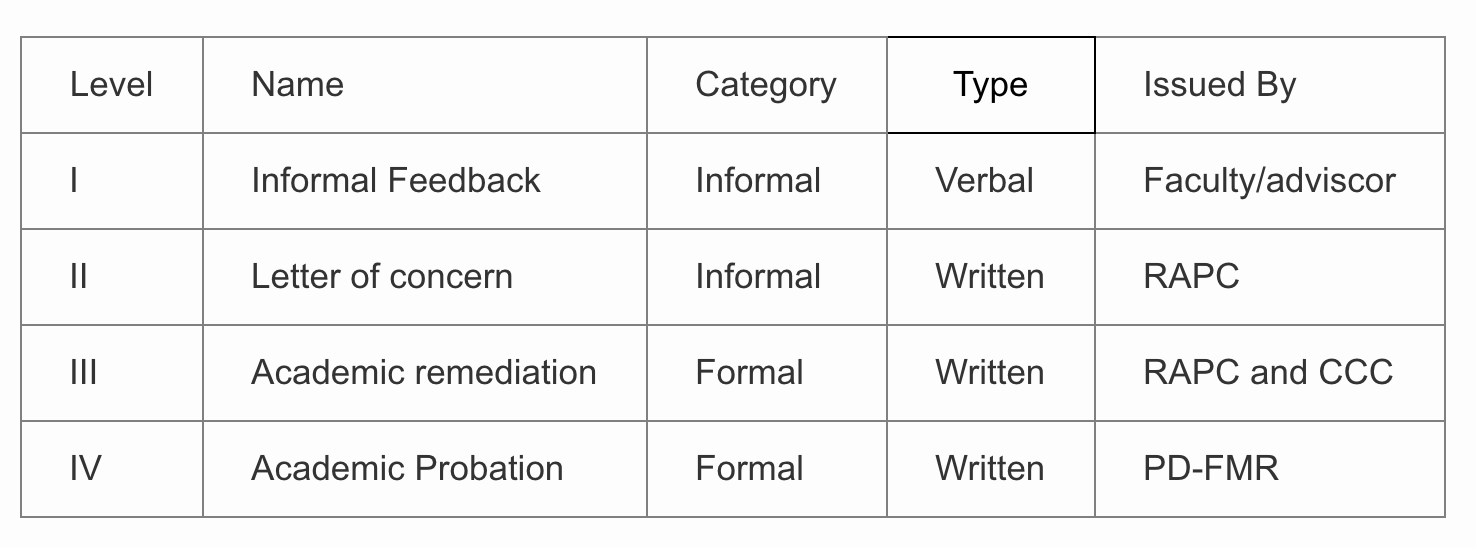

When a problem and or trend is observed, a discussion with the resident needs to ensue. This discussion should be held in private and be done by the resident’s faculty advisor. The issue should be described with details and specific examples. The tone of the conversation should be that of an open dialogue and nonaccusatory. Getting the resident’s viewpoint on the issue can help assess his or her understanding and insight. Referring the resident to the program’s Resident Academic and Professionalism Committee (RAPC) can help explore and address the issues related to the academic performance and/or professionalism behaviors using a balanced team approach. Appropriate documentation of the issues at hand by the program is important. A paper trail documenting the concerns and remedial action is critical for the program in the event that formal remediation or probation is warranted.

When a resident has been identified as “in difficulty,” it is important to intervene early and set expectations. Design an individualized learning plan (ILP) with the active input of the resident. Define expectations regarding the specific concern, including who will be involved, what will happen, and when the resident will be reevaluated. Addressing academic issues may include increased observation, independent study, procedural training courses, and supplemental testing. Addressing professionalism issues may include alternative schedules, counseling, referral to the employee assistance program, and approved leave of absence if indicated.

By outlining a clear path for the resident to follow to achieve success, the stress for both the faculty team and the resident is lessened.

Contact Us

11400 Tomahawk Creek Parkway

Leawood, KS 66211

(800) 274-7928

stfmoffice@stfm.org 


Ask a Question
AI Chatbot Tips

Tips for Using STFM's AI Assistant

STFM's AI Assistant is designed to help you find information and answers about Family Medicine education. While it's a powerful tool, getting the best results depends on how you phrase your questions. Here's how to make the most of your interactions:

1. Avoid Ambiguous Language

Be Clear and Specific: Use precise terms and avoid vague words like "it" or "that" without clear references.

Example:

Instead of: "Can you help me with that?"
Try: "Can you help me update our Family Medicine clerkship curriculum?"
Why this is important: Ambiguous language can confuse the AI, leading to irrelevant or unclear responses. Clear references help the chatbot understand exactly what you're asking.

2. Use Specific Terms

Identify the Subject Clearly: Clearly state the subject or area you need information about.

Example:

Instead of: "What resources does STFM provide?"
Try: "I'm a new program coordinator for a Family Medicine clerkship. What STFM resources are available to help me design or update clerkship curricula?"
Why this is better: Providing details about your role ("program coordinator") and your goal ("design or update clerkship curricula") gives the chatbot enough context to offer more targeted information.

3. Don't Assume the AI Knows Everything

Provide Necessary Details:The STFM AI Assistant has been trained on STFM's business and resources. The AI can only use the information you provide or that it has been trained on.

Example:

Instead of: "How can I improve my program?"
Try: "As a program coordinator for a Family Medicine clerkship, what resources does STFM provide to help me improve student engagement and learning outcomes?"
Why this is important: Including relevant details helps the AI understand your specific situation, leading to more accurate and useful responses.

4. Reset if You Change Topics

Clear Chat History When Switching Topics:

If you move to a completely new topic and the chatbot doesn't recognize the change, click the Clear Chat History button and restate your question.
Note: Clearing your chat history removes all previous context from the chatbot's memory.
Why this is important: Resetting ensures the AI does not carry over irrelevant information, which could lead to confusion or inaccurate answers.

5. Provide Enough Context

Include Background Information: The more context you provide, the better the chatbot can understand and respond to your question.

Example:

Instead of: "What are the best practices?"
Try: "In the context of Family Medicine education, what are the best practices for integrating clinical simulations into the curriculum?"
Why this is important: Specific goals, constraints, or preferences allow the AI to tailor its responses to your unique needs.

6. Ask One Question at a Time

Break Down Complex Queries: If you have multiple questions, ask them separately.

Example:

Instead of: "What are the requirements for faculty development, how do I register for conferences, and what grants are available?"
Try: Start with "What are the faculty development requirements for Family Medicine educators?" Then follow up with your other questions after receiving the response.
Why this is important: This approach ensures each question gets full attention and a complete answer.

Examples of Good vs. Bad Prompts

Bad Prompt

"What type of membership is best for me?"

Why it's bad: The AI Chat Assistant has no information about your background or needs.

Good Prompt

"I'm the chair of the Department of Family Medicine at a major university, and I plan to retire next year. I'd like to stay involved with Family Medicine education. What type of membership is best for me?"

Why it's good: The AI Chat Assistant knows your role, your future plans, and your interest in staying involved, enabling it to provide more relevant advice.

Double Check Important Information

While the AI Chat Assistant is a helpful tool, it can still produce inaccurate or incomplete responses. Always verify critical information with reliable sources or colleagues before taking action.

Technical Limitations

The Chat Assistant:

  • Cannot access external websites or open links
  • Cannot process or view images
  • Cannot make changes to STFM systems or process transactions
  • Cannot access real-time information (like your STFM Member Profile information)

STFM AI Assistant
Disclaimer: The STFM Assistant can make mistakes. Check important information.