Victoria Ngo, MD
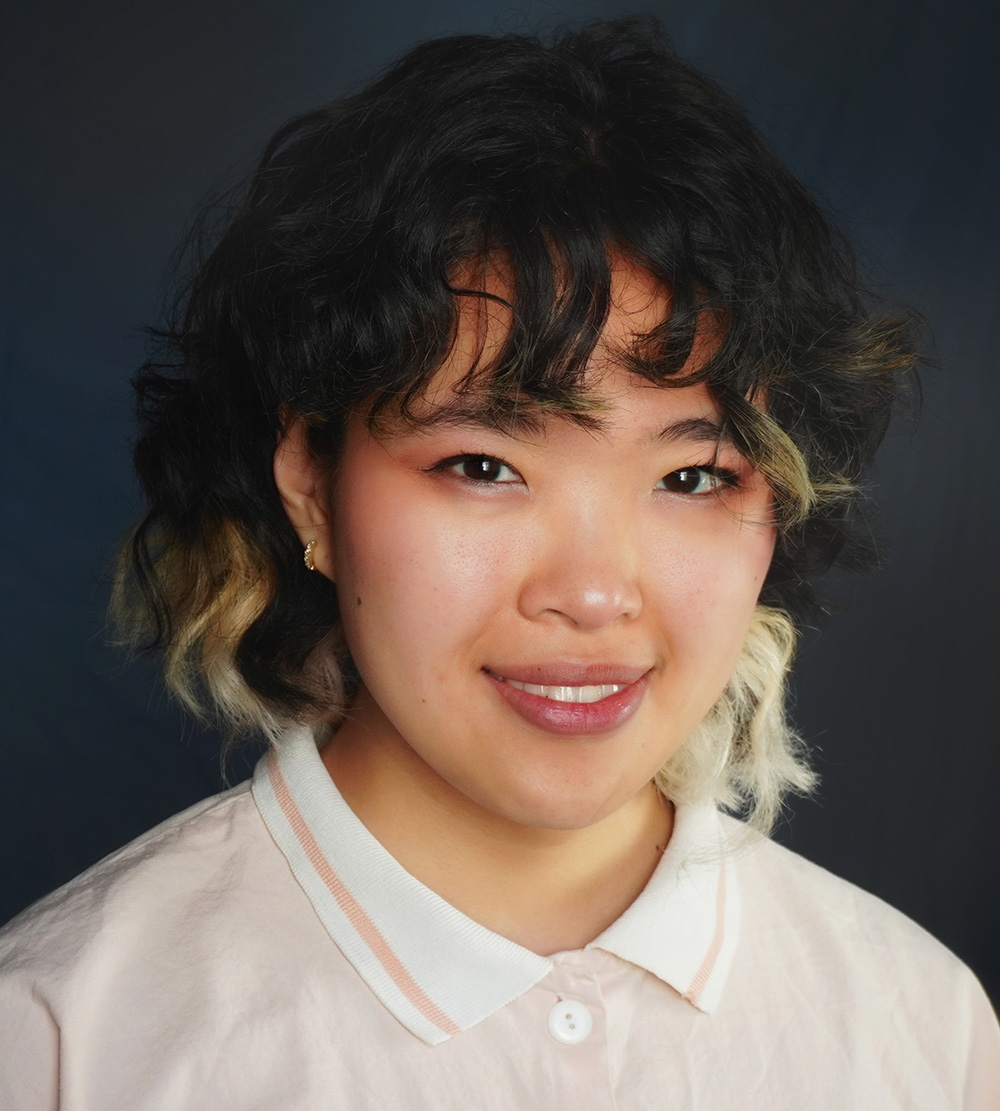
Victoria Ngo, MD, is a resident at the The Institute for Family Health Harlem Residency in Family Medicine in New York, NY. She is a 2026 recipient of a STFM Foundation Faculty for Tomorrow Resident Scholarship.
Dr Ngo's Family Medicine Story
Why are you interested in teaching family medicine?
Dr Ngo: My adviser in medical school loved saying that family medicine is the specialty of relationships. In our current society built upon deliberate inequity, I see communities fracture along fault lines of distrust and hyperindependence. I also see family medicine as an opportunity to restore our collective ability for connection. Instead of perpetually defending the value of our field against artificial intelligence and increasing subspecializing, family physicians can lead the charge toward a more connected and just society, a society in which people are able to take care of each other and themselves. When our patient-physician relationships successfully model trust, holistic understanding of one another, and depth of care, we begin to heal generations of betrayal and scarcity in the microcosms of our interpersonal dynamics.
I believe that all doctors, in our capacity as human beings, are innately capable of generative relationships. Medical students going into primary care, infamously wanting to help others, know how to connect with patients. In fact, many family medicine residents, despite rigorous professionalization and burnout during medical school, still know how to foster that therapeutic patient-physician relationship beginning intern year. Yet, in the flurry of residency, I find so many of my peers tired of connecting. Perhaps some of it is vicarious trauma. Perhaps another part is compassion fatigue. Perhaps there is also a component of not being able to do the medicine about which you feel most passionate. I feel lucky to have had teachers along the way who showed me how to find mutual healing in patient relationships. I have been able to learn HIV and hepatitis C care, full spectrum reproductive health care, and identity affirming care on top of our family medicine bread and butter. I know how it feels to provide a huge range of patient care from the moment someone enters this world to their last breath. The family medicine I see is irresistibly joyful and a site of miraculous recovery, second chances, and true healing.
My favorite pedagogy assumes that every person in the room has something to contribute to our collective learning. As teacher and students expand their understanding of a subject matter, we form new connections and frameworks through which to understand each other and ourselves. I love seeing learners experiment new solutions to old problems, ask questions we forgot we could ask, point our field toward directions I could have never imagined on my own. I want to be a teacher who allows medical students and residents to hold onto their innate sense of relationship and healing, who exercises medical prowess such that learners feel safe to invent under my supervision. I want to be a teacher who makes new teachers, much like mine made me. Family medicine as the specialty of relationships is a critical part of how our communities will retain our humanity. I believe we are the future of medicine, I am committed to bringing up others after me, and I am buckled in for the journey.
How do you think you can make a difference in the future of family medicine?
Dr Ngo: My medical student’s coat was still draped over the back of my chair an hour after I had dismissed her. She had a half day, but for whatever reason, she was somewhere in the hospital. I texted her to check in, but my worry was baseless. She returned to the team room moments later, eyes puffy. While saying goodbye to her patients at the end of the block, she discovered how many of them thought she was their doctor. She heard their gratitude and realized her impact. Then, she thanked me. She felt safe enough to immerse into these relationships with patients and their families, because she trusted me to be her safety net. She knew I would never allow her to do harm, and so she dared to take her place at the helm of our team. Her words narrated my own memories of being a medical student allowed to love her patients, and I knew she would continue on to be a devoted physician, as I like to think I have. Then as my residents did for me, I made a show of scolding her for staying so late and sent her on her way.
The student who came after her defended several of our patients from stereotypes our systems ascribed upon them with a softness our attending did not have. My next student stayed late to go through discharge paperwork for patients speaking remote languages. Another asked for my help in writing an op-ed for more affordable housing. My greatest pride is that so many of my students make time to say their farewells to patients they realize have become their own. People enter medicine because they care, and I refuse to allow my students’ compassion to fizzle out.
At some point in our path as educators, we shift from the ones orchestrating efforts to those making conditions possible for others to succeed. Every year, the entering class of students and residents are more diverse than before, having navigated spaces historically hostile to them. Traditional professionalization assimilates differences into the status quo, but good teachers identify what learners are passionate about and allow these passions to change us. I could talk about making remediation plans for an intern the program gave up on. I could talk about defending the competence of my neurodivergent peers. I could even talk about my own study of pedagogy. But in family medicine, I believe it is less a question of how to most effectively teach diabetes care and more a question of how to preserve the natural compassion, innovation, and crisp discernment for where change is possible with which all primary care learners start out. I have faith that students will learn good medicine to be accountable to their interests and their patients. Our job as educators is not to change the future of family medicine, but to make room for our learners to lead the way.
Contribute to the Creation of the Next STFM Story
Transforming the future of family medicine would not be possible without the generosity of countless STFM members and supporters. Through both member and departmental donations, the STFM Foundation is able to support the pipeline for academic family medicine.
Help transform the future of academic family medicine by donating to the STFM Foundation. If you have questions about the STFM Foundation, contact Mindy Householder at (800) 274-7928 or mhouseholder@stfm.org.