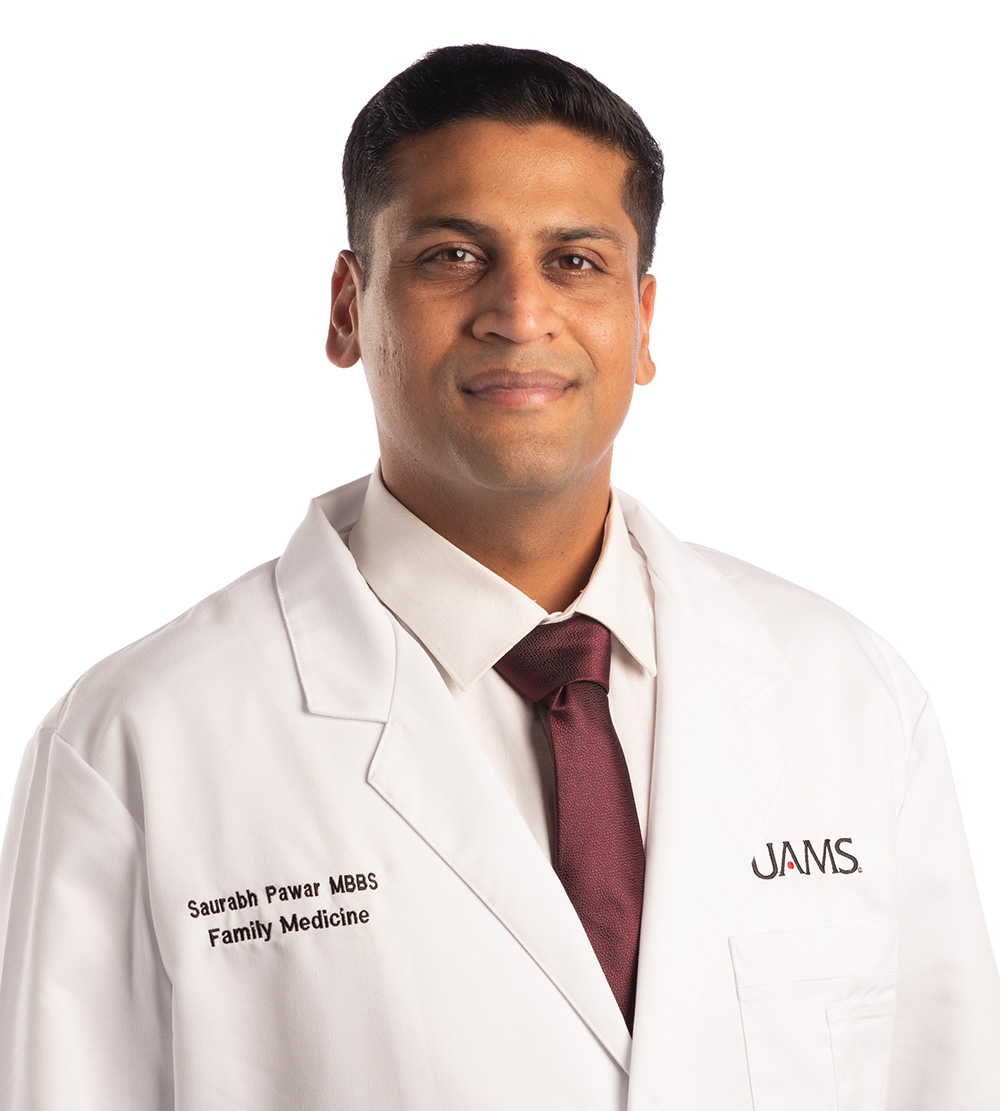
Saurabh Jagdish Pawar, MBBS, RDMS, CRGSS
Saurabh Jagdish Pawar, MBBS, RDMS, CRGSS, is a resident at the University of Arkansas for Medical Sciences Little Rock FMR Program. He is a 2026 recipient of a STFM Foundation Faculty for Tomorrow Resident Scholarship.
Dr Pawar's Family Medicine Story
Why are you interested in teaching family medicine?
Dr Pawar: Growing up in a household where medicine was more than a profession, I developed a deep appreciation for the power of knowledge sharing. My father, a health care practitioner and professor of medicine, emphasized teaching and mentoring, inspiring me from an early age to pursue a career in medicine and instilling in me a lifelong passion for education. Now, as a resident of family medicine, a field I believe deserves greater recognition for its essential role in health care, I am determined to carry forward his legacy.
Family physicians are often the first point of contact for patients, providing care across wide spectrum of conditions and age groups. This offers a unique opportunity to become a versatile clinician. Yet, despite its importance, family medicine remains underrepresented in medical education, with many students, myself included during my undergraduate years, unaware of its breadth, opportunities, and rewards. My aspiration is to shift this paradigm by exposing students to the depth and significance of family medicine, encouraging them to see it not merely as a career, but as a calling.
Education, at its core, is an instrument of influence and transformation. Just as my father imparted his wisdom and expertise to his students, I am eager to share the knowledge, insights, and experiences I have gained throughout my journey. Knowledge sharing is not merely about transmitting information; it is about fostering an environment of lifelong learning—nurturing critical thinking, empathy, and a compassionate approach to patient care. Through teaching, I aim to show students that medicine is not solely about diagnosing disease, but about forging meaningful relationships with patients, understanding their holistic needs, and delivering care that transcends clinical protocols. These, I believe, are the principles at the heart of family medicine.
The legacy of a teacher is measured not by accolades, but by the impact they have on their students and the patients those students go on to care for. I have been fortunate to learn from mentors who have profoundly shaped my growth as both a physician and a human being. During my internship with a senior family physician at an addiction medicine clinic, his dedication to his patients and his commitment to teaching gave me a new perspective on family medicine, one that solidified my decision to pursue it. It is this legacy, of my father and of my mentors, that inspires me to create a similar impact within the field.
My goal is to guide and mentor students who approach their work with curiosity, compassion, and purpose, fostering in them an appreciation for the profound value of providing continuous, compassionate care. As an educator, I hope not only to impart technical expertise, but to instill in students a sense of pride in their role as family physicians. By sharing my passion for this field, I aim to inspire the next generation to recognize and embrace the indispensable role that family medicine plays in delivering personalized, compassionate care to individuals and communities alike.
How do you think you can make a difference in the future of family medicine?
Dr Pawar: Family physicians are at the heart of the health care system, providing comprehensive, patient-centered care across all life stages. Despite this vital role, family medicine often struggles for recognition and support, both in medical education and within the broader health care landscape. My vision for shaping the future of family medicine is grounded in a four-point strategy that combines education, mentorship, innovation, and advocacy, each reflecting my commitment to advancing the field through leadership and action.
- Early Exposure: I believe family medicine must be reintroduced and reimagined within medical education. During my own training, I realized how little many students, including myself at first, understood about the depth and diversity of this specialty. I am committed to changing that narrative. As an educator, I aim to highlight the versatility of family medicine and its central role in health care delivery. Through dynamic, case-based teaching, I hope to expose students to the multifaceted nature of the field where physicians act as generalists, diagnosticians, counselors, and advocates. By emphasizing its scope and long-term rewards, I hope to inspire future physicians to view family medicine not only as a career but as a calling.
- Mentorship: During residency, I will have the privilege of mentoring students and junior residents providing an opportunity to address challenges such as burnout and workforce shortages. I have personally benefited from mentors who nurtured both my clinical judgment and empathy, and I aspire to do the same. I aim to foster resilience, curiosity, and compassion in trainees by guiding them through the complexities of patient care and promoting collaboration across disciplines. Mentorship, to me, is not only about teaching medicine but also about helping learners find meaning and purpose in their work.
- Peer Support: What distinguishes family medicine is its continuity, the long-term, relationship-centered care that follows patients through every stage of life. I aim to champion integrated care systems that combine physical, mental, and social health services. I intend to advocate for models that extend beyond episodic treatment to emphasize prevention, chronic disease management, and mental health. I believe integrating behavioral health and care management into daily practice is essential to creating a more cohesive health care system. Additionally, I plan to champion Point-of-Care Ultrasound (PoCUS) training as a standard skill within family medicine to enhance diagnostic efficiency and patient outcomes.
- Advocacy: Sustaining family medicine’s future requires leadership beyond the clinic. I am committed to advocating for policy reforms that improve reimbursement models, reduce administrative burdens, and expand funding for residency programs. By promoting reforms that prioritize primary care and community health, I hope to ensure family medicine receives the recognition and support it deserves.
I aspire to be a physician-educator and advocate who strengthens family medicine through innovation, mentorship, and policy leadership, helping to build a health care system that values continuity, compassion, and community-centered care for all.
Contribute to the Creation of the Next STFM Story
Transforming the future of family medicine would not be possible without the generosity of countless STFM members and supporters. Through both member and departmental donations, the STFM Foundation is able to support the pipeline for academic family medicine.
Help transform the future of academic family medicine by donating to the STFM Foundation. If you have questions about the STFM Foundation, contact Mindy Householder at (800) 274-7928 or mhouseholder@stfm.org.