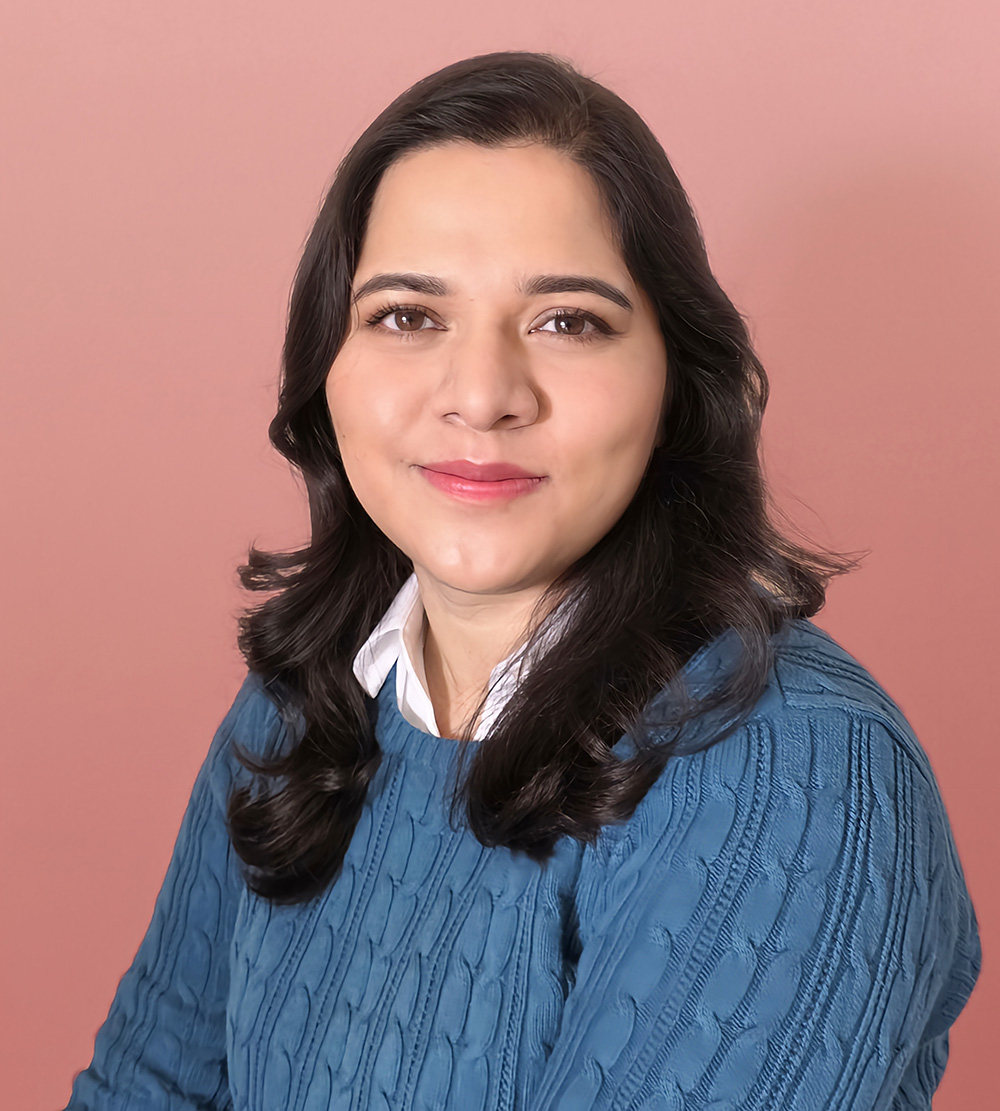
Pranali Kerkar, MD, MPH
Pranali Kerkar, MD, MPH, is a resident at the Louisiana State University Health (Shreveport) Monroe FMR Program. She is a 2026 recipient of a STFM Foundation Faculty for Tomorrow Resident Scholarship.
Dr Kerkar's Family Medicine Story
Why are you interested in teaching family medicine?
Dr Kerkar: I still remember the first time I watched a patient’s eyes fill with relief—not from a new medication, but from finally feeling heard. She was a young immigrant mother, overwhelmed by her child’s asthma and the maze of a healthcare system she barely understood. As we sat together, I realized that the most healing thing I could offer that day wasn’t a prescription; it was time, trust, and a simple explanation in plain language. That moment crystallized something in me: medicine, at its best, is teaching. And Family Medicine, in its purest form, is where that teaching begins, between doctor and patient, and later, between mentor and trainee.
My love for teaching was born in those quiet, everyday encounters where learning and healing blend seamlessly. During residency at LSU-Monroe, I’ve had mentors who modeled what it means to teach by example, attendings who stayed late after clinic to review management plans, and who taught not through lectures but through compassion. Their patience and humility showed me that being a teacher is less about knowing all the answers and more about helping others find their own.
Through my experiences precepting medical students and leading didactics, I’ve had the privilege of guiding medical students through their first experiences with family medicine, watching their nervousness fade as they connect with patients, helping them navigate uncertainty, and sharing the small victories that make this work so meaningful. I still get a spark of joy when a student says, “I finally understand why continuity matters,” or when they ask to shadow me again because they “felt seen” in my clinic. Those moments remind me that teaching is a reciprocal process. My learners challenge me, ground me, and reignite the sense of purpose that drew me to this field in the first place.
Teaching family medicine also feels deeply personal because it carries the potential to change systems, not just individuals. Working in rural and underserved clinics has shown me how gaps in education translate to gaps in care and how misunderstanding or bias can become barriers for patients, especially those from marginalized communities. My current project on enhancing LGBTQ+ cultural competency among residents has been one of the most transformative experiences of my training. It’s shown me that when we teach empathy and inclusion, we don’t just improve knowledge, we redefine what quality care looks like.
Family medicine is a discipline built on relationships, and teaching is the thread that holds those relationships together. To teach is to honor the humanity in our patients and our learners alike. It is to say, “I believe you can do this, and I’ll walk beside you while you learn.” That’s the kind of teacher I aspire to be. The kind who not only trains competent clinicians but also helps them find meaning in the work we do. Because in every lesson we pass on, we keep the heart of family medicine alive.
How do you think you can make a difference in the future of family medicine?
Dr Kerkar: During my 1st year of residency, I met a patient who changed my understanding of family medicine. She was a young mother with uncontrolled diabetes, juggling two jobs and caring for her aging parents. She came to the clinic exhausted, her glucose levels high, her hope low. Over the next few months, we talked—not just about insulin and diet, but about childcare, sleep, and the loneliness of being the caretaker who never gets cared for. Slowly, her sugars improved. But more importantly, she began to smile again. That transformation reminded me that the future of family medicine will not be built on technology or efficiency alone; it will be built on relationships. And I want to help shape that future.
I believe my greatest contribution to family medicine will come from bridging clinical care, education, and advocacy. My experiences working in underserved rural communities have shown me how deeply social and structural barriers affect health. Many of my patients lack insurance, stable housing, or even the confidence to ask questions. Too often, they’ve been made to feel invisible in systems not designed for them. As a family physician, I want to make sure no one feels unseen. As a teacher, I want to help future clinicians develop the same sense of empathy and responsibility, treating patients not as problems to solve, but as people to know. Teaching has become one of the most meaningful parts of my training. As resident chief of education, I’ve guided students through their first patient interviews, their first deliveries, and sometimes their first moments of doubt. I see myself in their uncertainty and their determination. Each time I help a learner find their footing, I feel the ripple effect of what family medicine can do, how one compassionate teacher can shape the care of hundreds of future patients. I want to continue that legacy by training physicians who are curious, reflective, and unafraid to sit with discomfort while seeking understanding.
My current project, enhancing LGBTQ+ cultural competency among residents, has shown me how education can be a tool for justice. By addressing biases and creating structured opportunities for reflection, I’ve watched colleagues grow in both skill and compassion. I hope to expand this kind of work, integrating reproductive justice, LGBTQ+ inclusion, and social medicine into residency curricula. The future of family medicine must be inclusive, courageous, and grounded in the belief that every patient deserves dignity.
I see my role as both a clinician and a connector, linking communities with care, learners with purpose, and compassion with action. The difference I hope to make is not in grand gestures, but in the quiet, consistent work of listening, teaching, and empowering others to do the same. Because when we teach others to care deeply, we change not just the future of family medicine, but the future of healing itself.
Contribute to the Creation of the Next STFM Story
Transforming the future of family medicine would not be possible without the generosity of countless STFM members and supporters. Through both member and departmental donations, the STFM Foundation is able to support the pipeline for academic family medicine.
Help transform the future of academic family medicine by donating to the STFM Foundation. If you have questions about the STFM Foundation, contact Mindy Householder at (800) 274-7928 or mhouseholder@stfm.org.