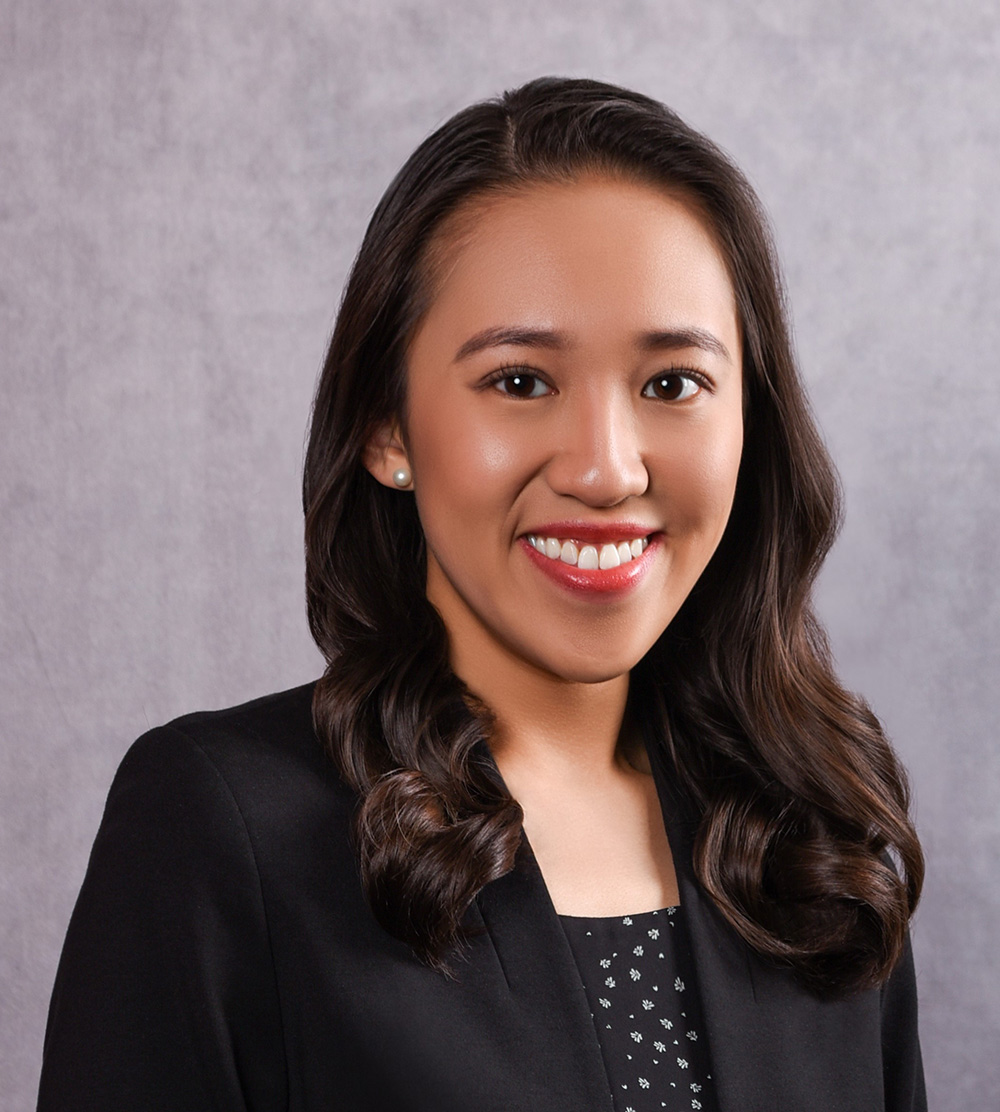
Andrea Nguyen, MD, MHA
Andrea Nguyen, MD, MHA, is a resident at the University of Texas Health Science Center at Houston FMR Program. She is a 2026 recipient of a STFM Foundation Faculty for Tomorrow Resident Scholarship.
Dr Nguyen's Family Medicine Story
Why are you interested in teaching family medicine?
Dr Nguyen: As my dad comes home, my 4-year-old self runs up and hands him a toy carousel. I had been asking for weeks what made the music; what made the horses go around. My dad nods, and I solemnly clear my play area for him. Hours later, my toy is deconstructed, each piece meticulously laid out. My dad, an engineer, tries his best to explain how the pieces work. After answering all the questions my smooth brain could conjure, he puts it back together. There were many days like this and before I started grade school, I had requested just about every one of my toys be taken apart to explain the inner workings. Once I was satisfied, he would say, “Never stop being curious. One day, you’ll pass it onto others.” This eventually led me to wonder how the human body works, and while asking my dad to dissect a human body for me was obviously not feasible, that specific interest was surely a factor that led me to become a physician.
I received strong encouragement at an early age to stay inquisitive and seek education. I knew no matter my career, I wanted to model that curiosity is not only nurtured but shared. In medical school I led a student free clinic, precepting in my clinical years. With each passing year, I not only saw how much more I had learned, but also how much more knowledge my students were gaining. Teaching basic physical exam skills and then seeing them perform independently was highly rewarding both to myself and my students. As a teacher, I feel fulfilled knowing every learner carries forward my influence, creating a ripple effect to thousands of patients I will never meet, and hundreds of research questions I will never formulate, advancing medicine. Teaching also ensures I continue to learn and fulfill my own curiosity. In the academic setting, there is continual feedback on both sides, encouragement to stay up to date, and constant inspiration from new projects being done around me.
Lastly, I want to teach more than medical facts. What has stayed with me most during training was not the lectures or textbook knowledge but the humanity I witnessed in my mentors. I remember how a surgeon went out of her way to debrief with me after a patient died when I did CPR for the first time; or how an obstetrician consoled a young woman who was miscarrying, and we cried with her; or how a family medicine attending agreed to pray with a patient who was battling multiple illnesses. Teaching family medicine will allow me to pass down the art of medicine just as much as the science. Just as my dad handed curiosity back to me piece by piece, I hope to hand it forward to the next generation of physicians—reminding them to never stop being curious and to always pass it on.
How do you think you can make a difference in the future of family medicine?
Dr Nguyen: As a medical student with a budding interest in addiction medicine, I had the privilege of witnessing some of a patient’s most pivotal moments: not in clinic, but in court. I heard stories of individuals who had not only overcome their substance use but persevered in navigating the legal system. Their resilience despite the financial, societal, and medical odds was inspiring, and truly showed the strength of the human spirit when supported with the right resources. That experience solidified my commitment to working in addiction medicine. I believe I can make a difference in the future of family medicine through this subspecialty working in academics as it allows me to practice medicine, teach the next generation, and create new knowledge through research.
At the very core of being a physician, I am making a difference through each individual patient on encounter at a time. Each screening, counseling, brief intervention, referral, and prescription, contributes to a patient’s lived experience of primary and preventative care. In addiction medicine, there are life-changing medications that I can prescribe and seeing patients continue their recovery, get their confidence back, and get back on their feet has been one of the most rewarding aspects of my training.
Beyond individual patients, I want to make a difference by teaching. As the need for addiction medicine rises, so does the need to dismantle the stigma surrounding it. Each learner provides the opportunity to teach the science behind addiction and the compassion required to treat it. It also gives me the opportunity to model how effective brief interventions, motivational interviewing, and active listening can be, skills translatable to all primary care. I remember initially wondering what observing court had to do with medicine, but those days proved to be incredibly memorable, allowing me to hear so much more of our patients’ stories, the broader context of recovery, and humanity behind it all. This same feeling is what I hope to inspire in my future learners through one patient, one treatment, one clinic day at a time.
Finally, each patient carries information that contributes to a larger body of knowledge that can contribute to research to shape future guidelines. As I pursue an addiction medicine fellowship, I hope to refine my clinical research skills and use them to create new knowledge and change on a broader scale. After training, I hope to stay in academics where I can offer a unique perspective to research teams from the patient facing side while helping design projects and formulate questions challenging the status quo. For me, making a difference in family medicine is not a box to check or milestone to reach—it is a lifelong commitment. At every level from individual patients, to teaching learners, to improving guidelines through years of research, there is opportunity for progress, and I am eager to be a part of it.
Contribute to the Creation of the Next STFM Story
Transforming the future of family medicine would not be possible without the generosity of countless STFM members and supporters. Through both member and departmental donations, the STFM Foundation is able to support the pipeline for academic family medicine.
Help transform the future of academic family medicine by donating to the STFM Foundation. If you have questions about the STFM Foundation, contact Mindy Householder at (800) 274-7928 or mhouseholder@stfm.org.